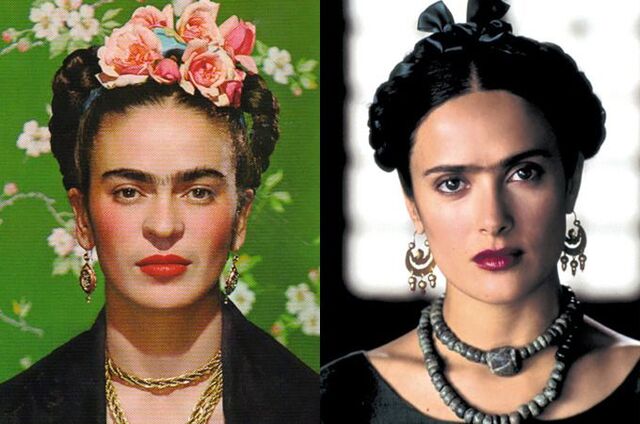
In the vast landscape of cinematic history, there are performances that define a career, and then there are projects that define a soul. For Salma Hayek, the 2002 biographical film Frida was both. It was a transformative moment that shifted her public persona from a magnetic screen presence to a powerhouse of artistic depth and production grit. More than just a standard biopic, Frida serves as a vibrant, unapologetic tribute to the life, agony, and rebellious individuality of Mexico’s most iconic artist, Frida Kahlo.
The journey to bring this story to the screen was a fearless labor of love, fueled by Hayek’s vision and an unwavering commitment to honoring a woman who turned personal pain into universal political and cultural expression.
A Breakthrough of Color and Pain
When Frida premiered in 2002, it didn’t just tell a story; it broke through the traditional boundaries of biographical storytelling. For Salma Hayek, it stood as the singular most important milestone in her professional life. The film was far from a “safe” Hollywood venture. It was a bold exploration of a woman who refused to apologize for her flaws, her politics, or her unconventional beauty.
Hayek’s journey to bring Frida Kahlo to the global stage was marked by a relentless pursuit of authenticity. By channeling Kahlo’s “unapologetic individuality,” Hayek didn’t just play a role—she inhabited a legacy. This performance of a lifetime would ultimately pave the way for a more inclusive cinematic landscape, proving that the stories of Latin American icons could captivate a global audience.
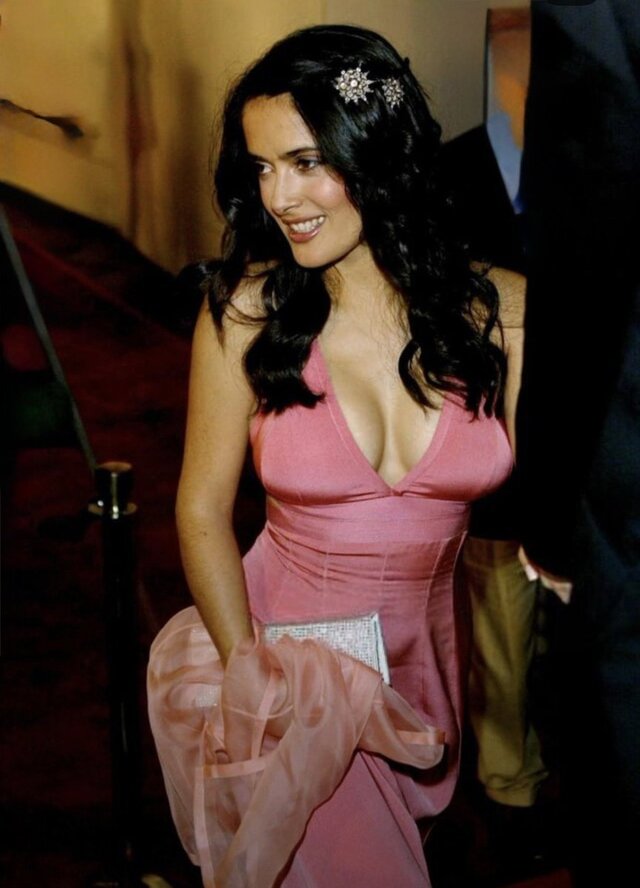
Beyond her artistic depth in Frida, Salma Hayek has long been celebrated as a global icon of beauty and elegance; take a look at some of her most captivating moments throughout the years
The Producer’s Fight: Creative Control and Authenticity
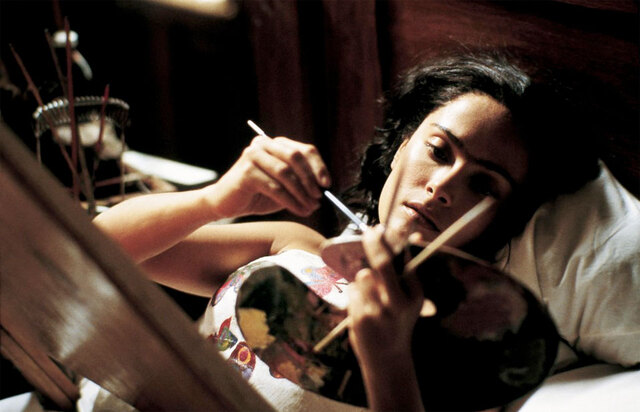
Many viewers recognize Hayek’s face on the screen, but few realize that her most grueling work took place behind the camera. In the face of intense industry skepticism, Hayek took on the role of producer, fighting a relentless battle to ensure that Kahlo’s story was told with the respect and cultural integrity it deserved.
Her commitment stemmed from a deep personal connection to the artist. Hayek saw in Kahlo more than just a fellow Mexican woman; she saw a symbol of strength, independence, and artistic integrity. Hollywood was initially hesitant to back a project that centered on a disabled, communist, female artist with a unibrow. Yet, Hayek fought for creative control, determined to portray the “real” Frida—the one who drank tequila, swore, and painted her own reality with blood and flowers.
Directed Surrealism: Julie Taymor’s Visual Language
To capture the essence of a woman whose life was as vivid as her canvases, Hayek teamed up with director Julie Taymor. Taymor rejected the constraints of traditional biography, instead creating a visual and emotional journey that utilized “dreamlike transitions” and “magical realism”.
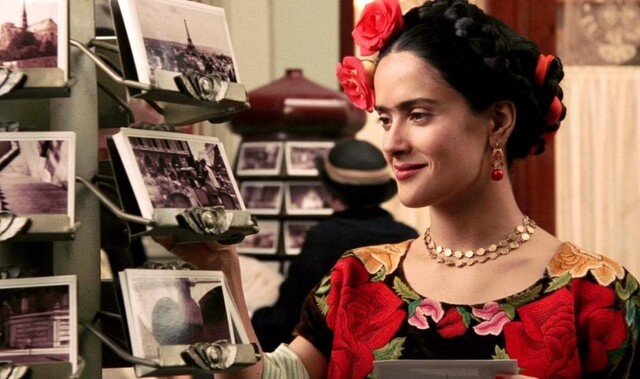
The film masterfully blends surrealism and fantasy to echo the visual language of Kahlo’s own artwork. Rather than a linear timeline, Taymor utilized symbolic imagery to mirror the artist’s internal struggles and passions. In several iconic scenes, the film transitions from real-life events directly into painterly scenes, effectively blurring the line between Kahlo’s physical existence in Coyoacán and the inner world of her paintings.
The Physical and Emotional Alchemy of Becoming Frida
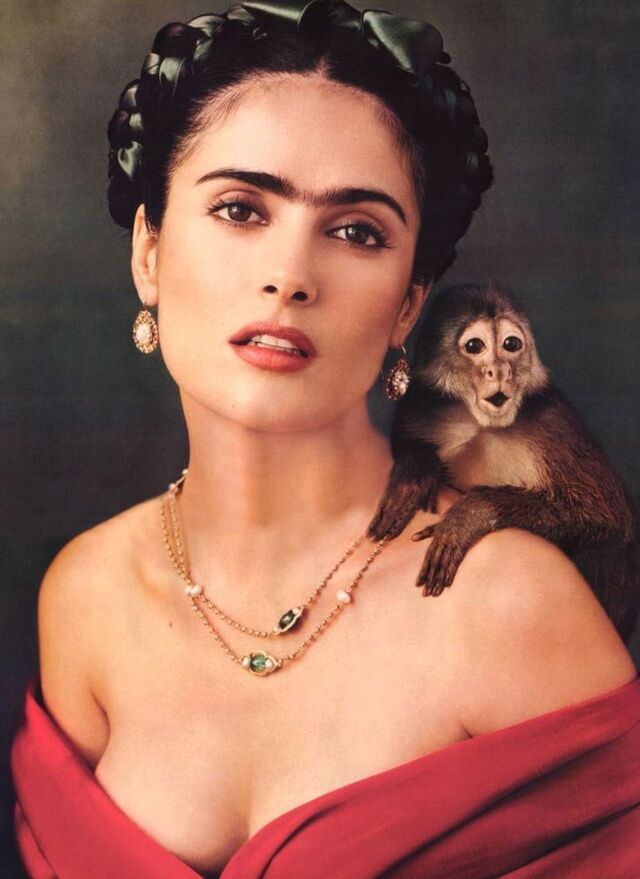
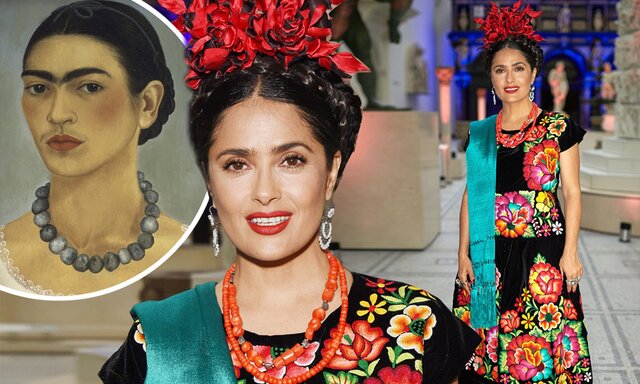
Becoming Frida Kahlo required more than just memorizing lines; it required a total physical and emotional alchemy. Hayek famously adopted Kahlo’s signature unibrow, traditional Tehuana dresses, and bold accessories—not as a costume, but as a defiant statement of identity.
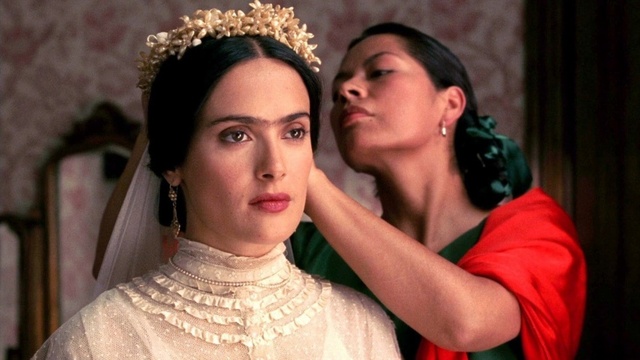
However, the physical transformation was only the surface. Hayek spent years meticulously researching Kahlo’s letters, personal history, and paintings to channel her intensity, vulnerability, and wit. This dedication resulted in a portrayal that was intellectually profound and emotionally raw. Her efforts were rewarded with an Academy Award nomination for Best Actress, a historic moment that made her one of the few Latina women ever nominated for the prestigious honor.
The Collision of Two Icons: Frida Kahlo and Diego Rivera
At the heart of the film is the turbulent, passionate, and often devastating partnership between Frida and muralist Diego Rivera, played by Alfred Molina. Their bond was a collision of two massive egos and artistic spirits, filled with profound admiration and deep betrayal.
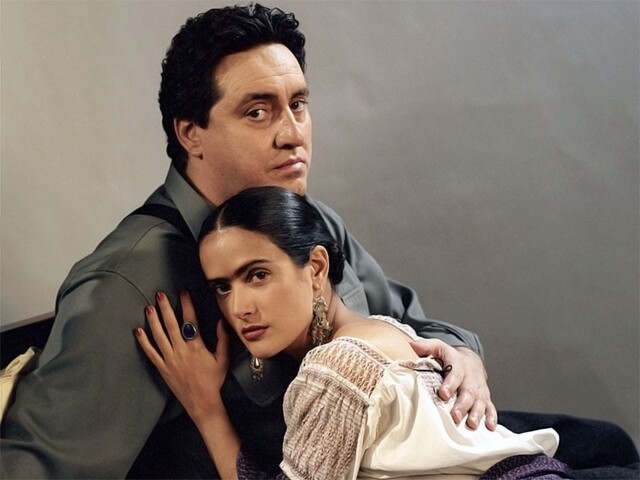
The chemistry between Hayek and Molina allowed the film to avoid simplifying their relationship. Instead, it portrayed them as two strong, flawed individuals who simultaneously inspired and destroyed one another. Their love story became a mirror of Kahlo’s own internal contradictions—fierce yet fragile, revolutionary in the streets yet deeply personal behind closed doors.
To truly grasp the cinematic magic that brought Kahlo’s canvases to life, watch this evocative glimpse into the visual storytelling of Frida
Cultural Resonance: The Soundtrack and Global Impact
The emotional weight of Frida was further amplified by its cultural richness. Elliot Goldenthal’s Academy Award-winning score blended traditional Mexican music with original orchestral pieces to create a hauntingly beautiful backdrop. The film also earned an Oscar for Best Makeup, a testament to the skill involved in recreating Kahlo’s iconic look.
Beyond the accolades, the film’s global impact was seismic. It reignited interest in Kahlo’s art, bringing her political voice and trailblazing feminism to a new generation of viewers outside academic circles. For the film industry, Fridawas a pivotal milestone that highlighted the commercial and critical power of diverse stories, signaling a long-overdue shift toward greater inclusion for Latina artists in Hollywood.
Final Thoughts: A Legacy That Transcends the Screen
More than two decades after its premiere, Frida continues to inspire audiences around the world. Its core themes—resilience through physical and emotional pain, the absolute freedom of self-expression, and the inherent beauty of imperfection—remain as relevant today as ever. Through Salma Hayek’s nuanced performance, Kahlo’s message remains clear: embrace who you are and speak your truth boldly.
Salma Hayek’s journey with this film cemented her status as a powerhouse triple threat—an actress of incredible depth, a tenacious producer, and a force for representation. She took a project few believed in and transformed it into a critical and cultural triumph. Ultimately, Frida stands as an immortal celebration of art and identity, a hauntingly beautiful reminder that when storytelling and purpose align, the result can transcend time itself.